
If you’re serious about buying a home, you need more than a decent credit score; you need a mortgage readiness checklist that prepares you to qualify, stay qualified, and close without last-minute surprises.
Mortgage readiness isn’t just about getting pre-approved. It’s about building stable financial patterns that lenders can verify from the first application through underwriting and closing. Many buyers are approved at pre-approval and then lose the deal because something changes. A true mortgage readiness checklist prevents that.
Let’s walk through this step by step in a way that reflects how underwriting actually reviews your file.
Mortgage Readiness Guide for First-Time Homebuyers
Table of Contents
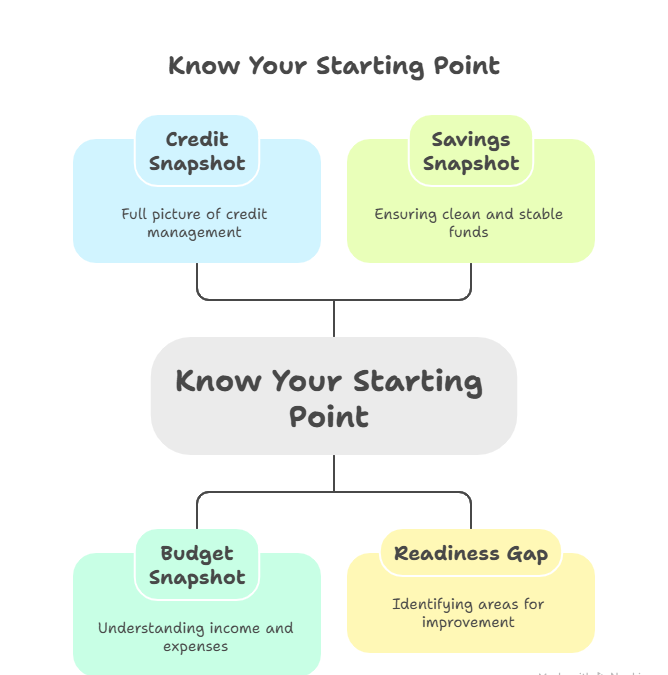
Step 1: Know Your Starting Point
If you don’t know exactly what your current profile looks like, you can’t plan the fastest, safest path to approval. Most first-time buyers skip this and jump straight to “improving credit,” but lenders don’t approve effort; they approve what they can verify today.
A. Credit Snapshot
A credit snapshot is not “my score is X.” It’s a full picture of how you manage credit: payment behavior, balance behavior, account age, and negative items across all bureaus.
- Pull All Three Bureau Reports (Equifax, Experian, TransUnion)
What to do (complete steps):
- Pull all three reports on the same day so the information is comparable. If you pull them weeks apart, balances and dates won’t match, and you won’t know what changed.
- Save the reports as PDFs and label them with the date (Example: “Experian_2026-02-18.pdf”).
- Create a simple comparison list:
- Account name (as it appears)
- Account number (masked)
- Status (open/closed/collection/charge-off)
- Balance
- Monthly payment
- Date opened
- Date last reported
- Compare each account across bureaus. You’re looking for:
- An account showing on one bureau but missing on another
- Different balances for the same account
- Different “last payment date” or “last activity date”
- Different account status (example: “closed” vs “charged off”)
- Different collection owner names or dates
What lenders/underwriting are verifying:
- Lenders often use a merged report that may show data you didn’t notice on a consumer version. If your bureaus are inconsistent, underwriting is more likely to ask for additional documentation or explanations because the file looks unstable.
Common mistakes that hurt you:
- Assuming “it’s only on one bureau, so it doesn’t matter.”
- Disputing items before understanding mortgage timing (some disputes can complicate underwriting).
- Ignoring small inconsistencies (dates matter, especially if re-aging is suspected).
- Identify Current Scores
What to do (complete steps):
- Record the score from each bureau: Equifax / Experian / TransUnion.
- Track the score monthly, but also track the drivers, because scores move for reasons:
- Utilization per card and overall
- Any late payment updates
- Any inquiry/new account
- Any collection/charge-off update
- Identify which bureau is your middle score (when all 3 exist). Many lenders use the middle score for qualification.
What underwriting is doing with your score:
- Determining eligibility for loan programs and pricing tiers.
- Setting mortgage insurance costs (especially on conventional loans).
- Comparing the score to your DTI and reserves to judge overall risk.
What most people miss:
- Underwriting cares less about “score went up” and more about whether the improvement is stable and not tied to temporary changes (like paying a card down once but then letting it climb again).
- Review Payment History
What to do (complete steps):
- For every account, scan the payment grid/history and write down:
- Any 30-day late
- Any 60/90-day late
- The most recent late date
- Whether lates are repeated or isolated
- Separate your lates into two categories:
- Recent lates (last 12 months) — most important
- Older lates (12+ months) — still relevant, but less damaging
- Identify which accounts are most “sensitive” for mortgage readiness:
- Installment loans (auto/student/personal) show stability
- Credit cards show balance control
What underwriting is verifying:
- Recent late payments are a red flag because they signal current financial instability.
- A single old late is often manageable; repeated lates or recent lates can trigger conditions or denial depending on severity.
What to do if you have lates:
- Stop new lates immediately (autopay + reminders).
- Prepare a clean, factual explanation for any severe or recent late pattern (not emotional, not blaming, just facts and resolution).
- Build a 6–12 month clean streak if possible before applying.
- Check Utilization Ratios
Utilization is one of the fastest-moving score factors and one of the easiest to accidentally sabotage.
What to do (complete steps):
- For each revolving account (credit cards, store cards, lines of credit), record:
- Credit limit
- Current balance that’s reporting
- Utilization percentage (balance ÷ limit)
- Calculate overall utilization across all cards.
- Identify:
- Any card above 30%
- Any card near maxed out (70–100%)
- Small-limit cards that spike easily
How to manage utilization:
- Your goal is not “pay it down whenever.”
- Your goal is to make sure the balance that reports to the bureaus is low.
- That means understanding statement dates:
- If you pay after the statement closes, the high balance may still be reported.
- Paying before the statement close is how you control what reports.
Mortgage readiness targets:
- Basic: below 30% overall and ideally per card
- Strong: 10–20%
- Best: 1–9% (without all cards being zero)
Common mistakes:
- Paying cards to zero, then immediately using them heavily (high statement balances still report).
- Closing cards (reduces available credit and can spike utilization).
- Maxing out store cards because “it’s only $300”; small limits do big damage.
- Identify Collections, Charge-Offs, or Inconsistencies
Negative items affect more than scores. They affect underwriting confidence and can create last-minute lender conditions.
What to do (complete steps):
- Create a “negative tradeline log” with:
- Creditor/collector name
- Balance
- Date opened
- Date last reported
- Payment status
- Which bureaus report it
- Look for inconsistencies:
- Different balances across bureaus
- Different last activity dates
- Different account numbers for the same debt
- A debt showing as “new” when it’s old (possible re-aging)
- Determine whether the item is:
- Medical / non-medical
- Small / large
- Recently updated / dormant
What underwriting is verifying:
- Whether collections must be paid (depends on program and lender overlays).
- Whether charge-offs show ongoing updates (could signal active collection).
- Whether reporting is accurate and stable.
Critical mortgage-ready rule:
You don’t automatically dispute everything, and you don’t automatically pay everything. You choose actions based on:
- loan program requirements
- timing to application
- risk of score volatility
- risk of triggering updates that make the item look “fresh”
- Confirm Personal Information Accuracy
Wrong personal info can lead to mixed files, verification failures, or accounts that don’t belong to you appearing.
What to do (complete steps):
- Check each bureau for:
- Name variations (misspellings, middle initial issues, maiden names)
- Date of birth (rare errors but important)
- Current and past addresses
- Employer names
- Flag anything that is:
- Not yours
- Outdated in a way that causes confusion (like an address you never lived at)
- Correct it through the bureau dispute process for personal info (separate from account disputes).
- Keep copies of what you submit and confirmation numbers if available.
Why this matters for underwriting:
Underwriting and verification systems match identity using these fields. If your identity data is messy, your file becomes harder to validate.
B. Budget Snapshot
A lender calculates DTI, but mortgage readiness requires more: you must know your real monthly capacity, so you don’t become “house poor” after closing.
- Calculate Total Gross Monthly Income
What to do (complete steps):
- Identify income type:
- Salary: annual ÷ 12
- Hourly: hourly rate × average weekly hours × 52 ÷ 12
- Variable: calculate a conservative average
- Only include income you can document consistently.
- If overtime/bonus/commission exists, don’t count it until you confirm it has enough history (many lenders average over time).
Mortgage-ready mindset:
Use two numbers:
- “Underwriting usable income” (documentable, consistent)
- “Real life income” (what you actually bring in)
Your home budget should be based on conservative reality, not best-case months.
- List Fixed Monthly Expenses
What to do (complete steps):
- Pull your last 2 full months of bank statements.
- List expenses that are consistent:
- Rent
- Car payments
- Insurance
- Minimum debt payments
- Childcare (if consistent)
- Confirm the amounts match what your credit report shows for debt payments.
Why fixed expenses matter:
Fixed obligations define your minimum survival budget. Mortgage readiness requires a housing payment that doesn’t crush your ability to save and stay current.
- List Variable Expenses
What to do (complete steps):
- Categorize variable spending:
- Essentials (groceries, utilities, gas)
- Optional (restaurants, subscriptions, entertainment)
- Identify “leaks”:
- small subscriptions
- repeated delivery spending
- impulse purchases
- Decide what gets reduced temporarily to accelerate readiness:
- utilization paydowns
- reserves build
- closing cost buffer
Mortgage-ready reality:
If you can’t consistently save now, you will feel pressure after closing. Underwriting doesn’t measure your lifestyle spending, but your payment performance will.
- Identify Debt Minimum Payments
What to do (complete steps):
- List every monthly debt payment from the credit report:
- student loans
- auto loans
- credit cards
- personal loans
- Compare to your bank statements to ensure payments are actually being made.
- If any account has no payment showing (common with some student loan statuses), understand how lenders calculate it (they often use a percentage or a documented payment plan).
Why this matters:
Mortgage approval is heavily tied to monthly obligations, not balances.
- Determine Current Discretionary Income
What to do (complete steps):
- Start with gross monthly income.
- Subtract:
- fixed expenses
- minimum debt payments
- essentials
- The remainder is your discretionary income.
How you use this number in the mortgage readiness checklist:
- determines how quickly you can pay down utilization
- determines savings rate for down payment/reserves
- determines safe housing payment range
C. Savings Snapshot
Savings isn’t only “having money.” It’s having money that is clean, sourced, and stable.
- Current Savings Balance
What to do (complete steps):
- List every account holding funds:
- checking
- savings
- money market
- investment
- retirement
- Separate balances into buckets:
- down payment
- closing costs
- reserves
- emergency fund
Mortgage-ready rule:
If your funds are scattered across multiple apps/accounts, consolidate early (not right before applying) so statements are clean.
- Emergency Fund Status
What to do (complete steps):
- Calculate essential monthly expenses (rent + utilities + food + insurance + minimum debts).
- Aim for at least 1 month initially, then build toward 2–3 months.
Why underwriters care:
Reserves and emergency funds reduce default risk. A buyer with reserves is seen as safer, even if their score isn’t perfect.
- Down Payment Savings
What to do (complete steps):
- Choose a realistic target based on your likely loan type.
- Set a consistent monthly transfer into a dedicated savings bucket.
- Avoid moving down payment money in and out of the account.
What underwriters verify:
They want to see the funds present and stable in your statements. Sudden large increases cause sourcing questions.
- Recent Large Deposits (If Any)
What to do (complete steps):
- Review your last 2 months of statements and highlight any deposits that are unusual compared to payroll deposits.
- Create a “deposit proof file” for each:
- bonus: paystub
- gift: gift letter + donor proof + transfer proof
- sale: bill of sale + deposit record
- refund: IRS/state deposit proof
Mortgage-ready warning:
Cash deposits are the hardest to document. Avoid them when possible.
- Source of Funds
What to do (complete steps):
- Ensure you can show a clear path for every dollar used for closing:
- where it came from
- how it moved to your account
- how long it has been there
- Keep transfers simple:
- one account to one account
- avoid multiple hops
Underwriting reality:
If an underwriter cannot easily follow the money trail, they will condition it.
D. Readiness Gap
This is where the mortgage readiness checklist becomes a plan instead of a list.
- What Is Strongest?
What to do:
Rate each pillar 1–5:
- credit stability
- income documentation
- savings/reserves
- paperwork organization
Your strength determines what can be leveraged, and your weakness determines your timeline.
- What Needs Stabilization?
Stabilization means stopping behaviors that create underwriting concerns:
- late payments
- new credit
- irregular deposits
- overdrafts
- job hopping without documentation clarity
Stabilization always comes before optimization.
- What Needs Correction?
Correction includes:
- inaccurate personal info
- reporting inconsistencies
- duplicate accounts
- incorrect dates/balances/statuses
- unresolved identity issues
Corrections should be tracked and documented so you can prove resolution if questioned.
- Estimated Timeline to Strengthen Weaker Areas
How to estimate (mortgage-ready approach):
- 30 days: autopay + document organization + stop negative behavior
- 60–90 days: utilization improvements start reflecting consistently
- 3–6 months: savings seasoning and stability pattern strengthens
- 6–12 months: rebuild after significant late payments or major negatives
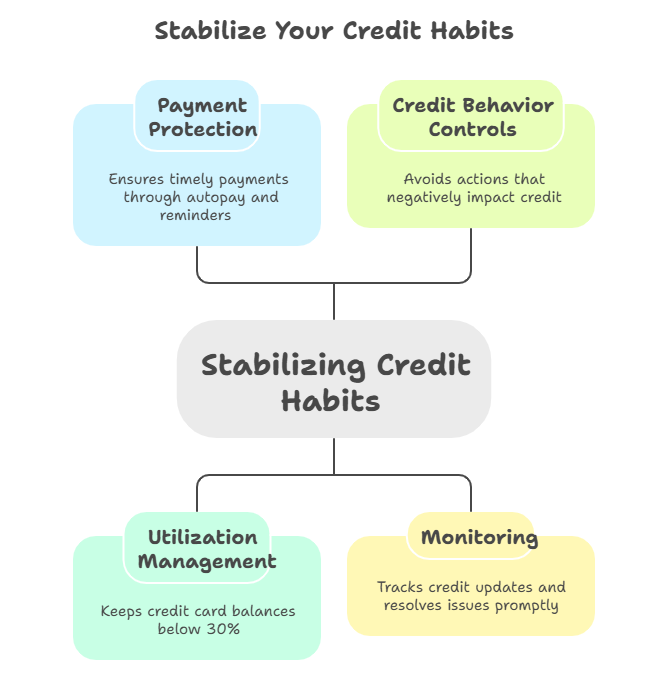
Step 2: Stabilize Your Credit Habits
Consistency is more important than aggressive change. Mortgage underwriting rewards predictable, controlled behavior over dramatic short-term improvement. The goal of this section of the mortgage readiness checklist is to eliminate volatility and demonstrate reliable financial management.
A. Payment Protection
Payment protection is not “try to pay on time.” It is a system that makes late payments extremely unlikely.
- Set All Accounts to Autopay or Reminders
Exactly what to do:
- For every account (credit cards, auto, student loans, personal loans), set autopay to at least the minimum payment.
- If you don’t trust autopay alone, add layered reminders:
- reminder 7 days before due date
- reminder 3 days before due date
- reminder on due date
- If cash flow timing is an issue (paid weekly/biweekly), change due dates where possible so they align with payday.
- Keep one “bill buffer” amount in checking (even $200–$500 helps) so autopay doesn’t fail due to timing.
Why it matters for mortgage readiness:
A single new late payment within 12 months can:
- drop scores quickly
- trigger automated underwriting failure
- require letters of explanation
- cause lender to delay or deny depending on severity
Mortgage-ready standard:
Your payment system should work even when life gets busy. Underwriting is not forgiving about recent lates.
- Prioritize Mortgage-Impact Accounts (Installment + Revolving)
Not all accounts are viewed the same during mortgage review.
What to do:
- Identify your mortgage-impact accounts:
- Installment loans: auto, student loans, personal loans
- Revolving accounts: credit cards, store cards
- Installment loans show:
- stable repayment behavior
- long-term responsibility
- Revolving accounts show:
- how you manage risk and spending
- If you ever have to choose where limited money goes, mortgage readiness priority is:
- keep everything current first (minimums)
- then lower utilization (target the highest-utilization card)
Why this matters:
- Installment lates can look severe because they suggest you can’t maintain structured obligations.
- Revolving high balances can signal financial strain even if you pay on time.
- Maintain Student Loans Current
Student loans are often the oldest tradelines on a report, and they can carry heavy weight in underwriting.
Exactly what to do:
- Confirm current status:
- current / pays as agreed
- deferred
- forbearance
- delinquent
- If delinquent:
- stabilize immediately (bring current or enter an approved plan)
- If federal loans:
- consider an IDR plan if payment is unaffordable
- make sure the plan is active and reporting correctly
- Make on-time payments consistently. Even if the payment is low, consistency matters.
Why it matters for mortgage readiness:
- Student loans impact DTI (monthly payment calculation).
- They impact payment history (lates hurt significantly).
- Some lenders treat unresolved student loan issues as a major risk indicator.
Mortgage-ready rule:
You want student loans to be boring: current, predictable, and documented.
- Avoid New Late Payments at All Costs
This is the “non-negotiable” rule.
Exactly what to do:
- If you cannot pay a bill, pay something before it becomes late (even partial payments can help prevent severe delinquency depending on the lender’s policy).
- Call the creditor before the due date if you are at risk — ask for:
- due date adjustment
- hardship plan
- payment arrangement
- Keep proof of any arrangement.
- Never ignore notices. Silence turns small issues into late marks.
Why it matters:
Recent lates create:
- score volatility
- underwriting distrust
- conditions and delays
- sometimes outright disqualification, depending on the program
Mortgage-ready mindset:
It’s easier to prevent a late than to recover from one.
B. Utilization Management
Credit utilization is one of the most influential and fastest-moving components of your credit profile. It reflects how much of your available revolving credit you are actively using. High utilization signals financial strain. Controlled utilization signals stability.
- Keep Revolving Balances Below 30%
Exactly what to do:
- Identify every revolving account:
- Credit cards
- Store cards
- Personal lines of credit
- Calculate utilization for each account individually:
- Balance ÷ Credit limit = Utilization %
- Also calculate overall utilization:
- Total revolving balances ÷ Total revolving limits
If any card exceeds 30%, that card becomes your first priority.
If overall utilization exceeds 30%, your profile may appear overextended even if payments are current.
How to correct it strategically:
- Pay down the highest utilization account first.
- Do not spread small payments across all cards equally if one card is heavily maxed.
- Focus on reducing utilization percentages — not just balances.
For example:
A $500 balance on a $500 limit card = 100% utilization.
A $500 balance on a $5,000 limit card = 10% utilization.
The smaller card is hurting you more.
Why this matters for mortgage readiness:
Underwriters interpret high revolving balances as dependency on credit. Even if your score qualifies, high utilization combined with a high DTI increases perceived risk.
- Ideal Target: Below 10–20%
While 30% is the maximum safety zone, stronger mortgage files often show:
- Individual cards below 20%
- Overall utilization below 20%
- At least one card reporting a small balance (1–9%)
Exactly how to optimize reporting:
- Identify your statement closing date for each card.
- Pay the balance down before the statement closes — not just before the due date.
- Allow a small balance to report on one primary card.
- Keep other cards at zero or very low.
Why not zero everything?
If all revolving accounts report zero consistently, some scoring models may not register active credit use. A small controlled balance can demonstrate responsible usage.
Mortgage-ready mindset:
You are not trying to “game” the system. You are demonstrating low risk, controlled usage, and stability.
- Avoid Maxing Out Store Cards
Store cards are often small-limit accounts (e.g., $300–$1,000 limits). A simple purchase can spike utilization dramatically.
Exactly what to do:
- Review store card limits.
- If limit is small, either:
- Keep balance near zero
- Or avoid using it entirely during your readiness window
- Never allow store cards to exceed 30%.
Why store cards hurt disproportionately:
Small limits mean high utilization percentages even with small balances. Underwriting systems flag high-utilization tradelines.
Mortgage-ready decision:
If a store card cannot be used responsibly without spiking utilization, pause usage during your mortgage readiness phase.
- Avoid Closing Old Accounts Before Applying
Closing accounts reduces available credit and may increase overall utilization.
Exactly what to do:
- Review the age of each account.
- Identify your oldest accounts, these support your credit history length.
- If an account has no annual fee and no major risk, keep it open.
- Do not close accounts within 6–12 months of applying unless necessary.
Why this matters:
Closing accounts can:
- Shorten average age of credit (over time)
- Reduce total available credit
- Increase overall utilization
- Change scoring calculations
Mortgage-ready rule:
Do not make structural credit changes close to application unless strategically necessary.
C. Credit Behavior Controls
This section focuses on what NOT to do during your mortgage readiness phase. Many mortgage denials occur not because someone had bad credit, but because they changed behavior at the wrong time.
- Avoid Opening New Credit
Every new account creates:
- A hard inquiry
- A new tradeline
- A new monthly obligation (even if small)
- Reduced average age of accounts
Exactly what to do:
- Freeze unnecessary credit applications.
- Decline store card promotions.
- Avoid financing offers (furniture, electronics, phones).
- If pre-approved offers arrive, ignore them.
Why it matters for underwriting:
Underwriters review:
- New inquiries
- New accounts
- Debt added after pre-approval
New credit increases uncertainty. Lenders may require re-pulling credit before closing.
Mortgage-ready rule:
From the moment you begin serious mortgage preparation, assume all new credit is off-limits.
- Avoid Financing Large Purchases
Major purchases increase DTI and reduce reserves.
Exactly what to avoid:
- Car loans
- Buy-now-pay-later plans
- Furniture financing
- Large personal loans
- Co-signing obligations
Even if payments are “small,” they count toward DTI.
Why it matters:
Mortgage qualification is often close to threshold limits. A $250 monthly new obligation can significantly reduce buying power.
Mortgage-ready mindset:
Delay lifestyle upgrades until after closing.
- Avoid Co-Signing Loans
Co-signed loans can count as your debt even if someone else pays.
Exactly what to consider:
- If you co-sign:
- The obligation appears on your credit.
- The monthly payment may count toward your DTI.
- Removing yourself later can be complicated.
Why underwriting flags this:
Underwriters assume you are responsible if the primary borrower defaults.
Mortgage-ready rule:
Do not co-sign for anyone during your mortgage preparation phase.
- Avoid Transferring Large Balances Without a Strategy
Balance transfers can temporarily spike utilization and create new inquiries.
Exactly what to evaluate:
- Will the transfer increase utilization on the receiving card?
- Does it open a new account?
- Will the inquiry lower score temporarily?
- Is the move happening within 3–6 months of application?
When balance transfers make sense:
- Well before application
- With clear reporting strategy
- Without increasing overall utilization
Mortgage-ready rule:
Any structural credit move must be intentional and timed properly.
D. Monitoring
Monitoring is not casual checking. It is a structured tracking of stability.
- Track Updates Monthly
Exactly what to monitor:
- Score changes
- Balance updates
- New inquiries
- Status changes
- Collection updates
- Date last reported changes
Keep a monthly log documenting:
- What changed
- Why it changed
- What action was taken
Why this matters:
Early detection prevents last-minute underwriting surprises.
- Confirm Disputes Are Reporting Accurately
If disputes were filed:
- Verify outcome status.
- Confirm account is updated correctly.
- Ensure no incorrect “account in dispute” flags remain when applying.
Why underwriting may care:
Some loan programs require disputes to be resolved before closing.
Mortgage-ready rule:
Dispute with strategy, not emotion.
- Watch for Unexpected Changes
Unexpected changes include:
- New collections
- Updated negative items
- Increased balances
- Hard inquiries you did not authorize
- Personal information changes
Exactly what to do:
- Investigate immediately.
- Document findings.
- Resolve inaccuracies early.
Mortgage-ready mindset:
Your credit report should not surprise you. Stability is intentional.
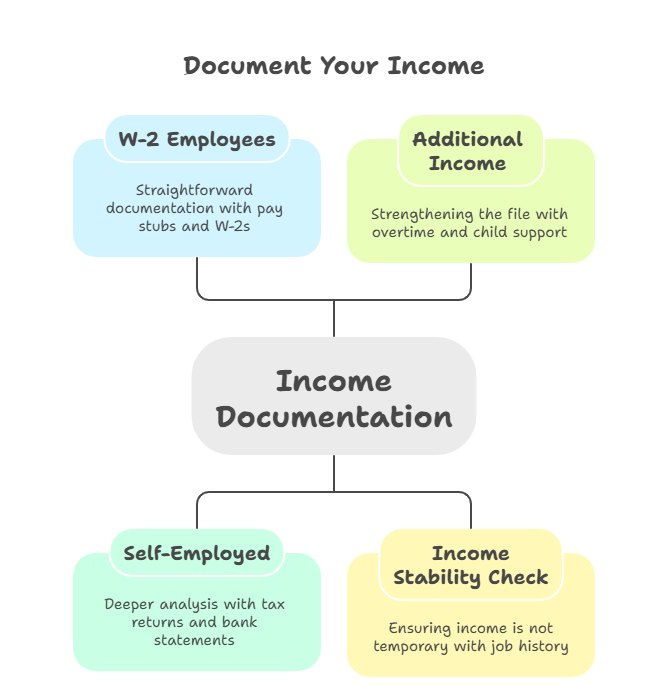
Step 3: Document Your Income
Income documentation is one of the most misunderstood parts of the mortgage readiness checklist. Many buyers believe that earning enough money guarantees approval. In reality, lenders approve income that is stable, documented, and likely to continue.
Underwriting does not approve potential income. It approves verified income.
A. W-2 Employees
If you are paid by an employer and receive a W-2, your income documentation is generally more straightforward, but still requires careful preparation.
- Most Recent 30 Days of Pay Stubs
Exactly what to do:
- Gather your two most recent pay stubs if paid biweekly (or four if paid weekly).
- Ensure each pay stub clearly shows:
- Your full name
- Employer name
- Pay period dates
- Year-to-date (YTD) earnings
- Gross income
- Deductions
- Compare YTD income to prior year totals to confirm consistency.
If your income varies (overtime, bonuses), calculate the average based on YTD.
Why underwriting reviews this carefully:
Underwriters compare:
- Current pay rate
- YTD totals
- Prior W-2 totals
- Employment length
They want to confirm your income trend is stable or improving, not declining.
Common issues that delay files:
- Missing pages
- Illegible screenshots instead of official pay stubs
- Inconsistent hours compared to historical income
- Large drop in YTD earnings compared to prior years
- Last 2 Years W-2s
Exactly what to do:
- Collect W-2 forms from the last two tax years.
- Confirm:
- Employer name matches current employer (if same company)
- Income is consistent or shows reasonable progression
- If you changed employers, be prepared to explain why.
Why this matters:
Underwriters assess:
- Income stability over time
- Employment continuity
- Income volatility
A dramatic income drop from one year to the next requires explanation.
- Last 2 Years Tax Returns (If Required)
Not all W-2 borrowers must provide full tax returns, but you may be required to if:
- You have side income
- You own rental property
- You receive 1099 income
- You have significant deductions
- You are self-employed part-time
Exactly what to do:
- Provide complete signed returns with all schedules.
- Review them yourself before submission.
- Identify:
- Business losses
- Unreimbursed expenses
- Schedule C income
- Rental losses
Why this matters:
Tax returns can reduce qualifying income if deductions are significant. Underwriting may average or adjust income based on net income figures.
- Employment Verification Contact Info
Lenders perform verbal and written verification of employment (VOE).
Exactly what to do:
- Confirm your HR department’s correct contact process.
- Inform HR that verification may occur.
- Avoid giving incorrect manager contact information.
Why this matters:
Delays often occur because HR cannot verify employment quickly. Employment must be confirmed shortly before closing.
B. Self-Employed
Self-employed income requires deeper analysis because it fluctuates and is influenced by deductions.
- Last 2 Years Full Tax Returns
Exactly what to do:
- Provide complete federal returns with all schedules.
- Review:
- Schedule C (sole proprietor)
- K-1 forms (partnerships)
- Corporate returns if applicable
- Identify net income trends.
Underwriting generally uses net income after expenses, not gross revenue.
Why this matters:
If income decreased from Year 1 to Year 2, lenders may use the lower figure.
Consistency is critical.
- Business Returns (If Applicable)
If you operate through an S-Corp, C-Corp, or partnership, business returns may be required.
Exactly what to do:
- Provide signed copies.
- Identify:
- Retained earnings
- Business debt
- Ownership percentage
Your ownership percentage determines how income is calculated.
- Year-to-Date Profit & Loss
A P&L statement must reflect current business performance.
Exactly what to do:
- Prepare a clean year-to-date P&L.
- Ensure totals match bank deposits.
- Be conservative — do not inflate projections.
Underwriting compares:
- YTD P&L
- Prior tax returns
- Bank statement deposits
Discrepancies raise red flags.
- 2–3 Months Business Bank Statements
Exactly what to do:
- Provide complete statements.
- Highlight recurring deposits.
- Ensure deposits align with reported income.
Underwriters review for:
- Deposit consistency
- Large irregular deposits
- Business stability
- CPA Letter (If Required)
Some lenders require CPA verification confirming:
- Business is active
- Borrower is in good standing
- Income is likely to continue
Prepare early to avoid delays.
C. Additional Income
Additional income can strengthen your file, but only if documented properly.
- Overtime/Bonus History (2-Year Average)
Lenders typically require a 2-year history of consistent receipt.
Exactly what to do:
- Confirm overtime/bonus appears on W-2s.
- Calculate the average over 24 months.
- Confirm the employer indicates the likelihood of continuation.
If income fluctuates dramatically, underwriters may average conservatively.
- Commission History
Commission income is variable and requires history.
Provide:
- W-2 or 1099 history
- Year-to-date totals
- Employment verification
Stability and trend matter more than peak months.
- Child Support (If Used for Qualification)
Child support can count if:
- Received consistently
- Documented via court order
- Likely to continue for the required duration
Provide:
- Court order
- Bank statements showing consistent deposits
Irregular or undocumented child support cannot be counted.
- Rental Income Documentation
Rental income must be verifiable.
Provide:
- Lease agreement
- Tax return Schedule E
- Proof of receipt via bank statements
Lenders may discount rental income to account for vacancy.
D. Income Stability Check
This section of the mortgage readiness checklist ensures income strength is not temporary.
- Same Employer for 2+ Years?
Longevity supports stability. However, it is not mandatory if you remain in the same field.
If you recently changed employers but remain in the same industry, this can still be acceptable.
- Same Field of Work?
Field continuity reduces perceived risk.
For example:
Changing hospitals as a nurse is less risky than switching from nursing to starting a landscaping business.
- Any Recent Job Changes?
If you changed jobs:
- Provide an offer letter
- Confirm salary
- Confirm start date
- Ensure probationary period is completed (if applicable)
Major job changes shortly before applying can complicate approval.
- Any Gaps Needing Explanation?
Employment gaps longer than 30 days may require explanation.
Prepare a concise letter explaining:
- Reason for the gap
- How you supported yourself
- Why income is now stable
Continuing in the same structure and full depth.
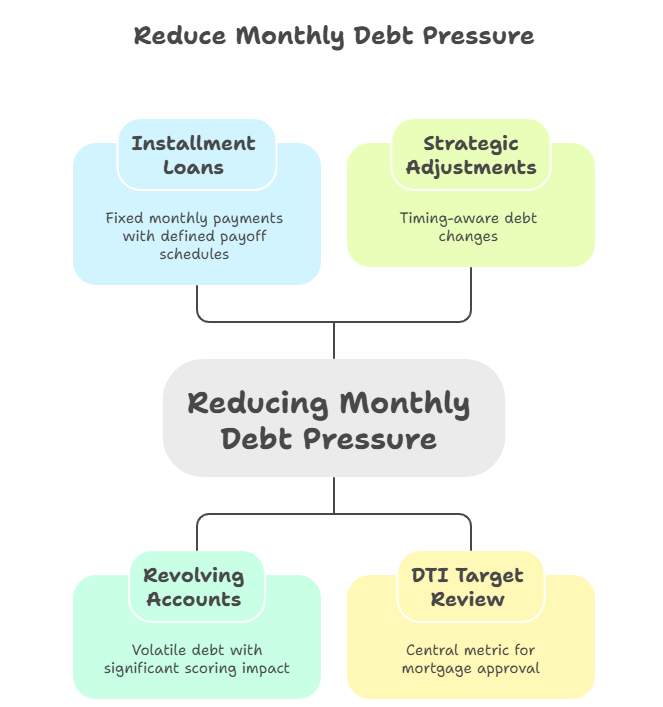
Step 4: Reduce Monthly Debt Pressure
Reducing debt pressure is not about eliminating all debt. It is about controlling monthly obligations so your debt-to-income ratio (DTI) stays within safe approval thresholds and your post-closing budget remains stable.
Mortgage approval is heavily influenced by monthly payments, not just balances.
A. Installment Loans
Installment loans include auto loans, student loans, and personal loans. These have fixed monthly payments and defined payoff schedules.
- Auto Loans
Auto loans typically carry higher monthly payments and directly impact DTI.
Exactly what to evaluate:
- Identify:
- Remaining balance
- Monthly payment
- Interest rate
- Remaining term
- Determine how much that monthly payment affects your DTI.
- Compare:
- Benefit of paying off the loan
- Impact on reserves if you use savings to do so
Strategic considerations:
- Paying off a $400/month auto loan may significantly improve DTI.
- However, draining $12,000 in savings to eliminate that payment could reduce reserves below acceptable levels.
- Some lenders may require proof the loan is paid in full and closed before excluding it from DTI.
Mortgage-ready balance:
Do not eliminate debt at the cost of leaving yourself cash-poor.
- Personal Loans
Personal loans often carry moderate balances with moderate payments.
Exactly what to review:
- Confirm remaining term; if less than 10 months, some lenders may exclude it from DTI depending on guidelines.
- Calculate how much DTI reduction would occur if paid off.
- Evaluate whether payoff improves qualification materially.
Common mistake:
Paying off small loans that barely change DTI while ignoring high-utilization credit cards that hurt both DTI and score.
- Student Loans
Student loans are treated differently depending on status.
Exactly what to confirm:
- Current repayment plan.
- Documented monthly payment.
- Whether the payment reported on credit reflects actual obligation.
If payment shows $0 due to deferment or IDR, some lenders will calculate a percentage of the balance for DTI.
Mortgage-ready move:
Have documentation showing your current repayment terms. Stability matters more than aggressive payoff.
- Consider Payoff vs Strategic Retention
Debt reduction should follow a structured evaluation:
- Does paying off this debt significantly improve DTI?
- Does it improve the score (utilization or installment stability)?
- Does it reduce reserves below safe levels?
- Is the payoff happening too close to the application?
Sometimes retaining a manageable installment loan is safer than depleting savings.
B. Revolving Accounts
Revolving debt is more volatile and heavily weighted in scoring models.
- Pay Down High-Balance Cards
High-balance cards increase both DTI (minimum payment impact) and utilization (score impact).
Exactly what to do:
- Rank cards by utilization percentage.
- Attack the highest percentage first.
- Monitor statement closing dates to ensure a lower balance report.
- Avoid using the card heavily during the payoff phase.
Reducing a card from 90% utilization to 25% may have a greater impact than paying off multiple smaller balances.
- Eliminate Small Maxed Accounts
Small-limit cards often damage scores disproportionately.
Exactly what to do:
- Identify cards under $1,000 limit.
- If the balance exceeds 50%, prioritize reducing below 30%.
- If possible, pay off fully and maintain minimal usage afterward.
Small cards reporting near limit signal risk, even if balances are not large in dollar terms.
- Avoid Balance Transfers That Spike Utilization
Balance transfers can be helpful for interest reduction, but timing is critical.
Exactly what to evaluate:
- Will the receiving card exceed 30% utilization?
- Will a new account be opened?
- Is this within 3–6 months of application?
Balance transfers that increase utilization temporarily may reduce scores at the wrong time.
C. Strategic Adjustments
Strategic debt adjustments require timing awareness.
- Refinance High-Interest Loans (If Beneficial)
Refinancing can reduce monthly payments, but:
- Creates a new inquiry
- Opens a new account
- Changes account age
- May temporarily reduce score
Only refinance if:
- It significantly improves DTI
- It occurs well before application (ideally 6+ months)
- It stabilizes rather than complicates your profile
- Pay Off Accounts With Small Balances
Eliminating small installment loans can simplify DTI.
Exactly what to confirm:
- Lender requires proof of payoff.
- Account shows a zero balance on the updated credit report.
- No new debt replaces it.
Avoid making a payoff within days of application unless the lender instructs you.
- Avoid Consolidations Close to Application
Debt consolidation loans often:
- Add inquiries
- Add new tradelines
- Shift balances dramatically
- Create temporary score volatility
Even if the monthly payment decreases, consolidation close to the application can complicate underwriting.
Mortgage readiness prioritizes stability over restructuring.
D. DTI Target Review
DTI (Debt-to-Income Ratio) is central to mortgage approval.
- Front-End Ratio (Housing)
Front-end DTI measures the projected housing payment divided by gross income.
Example:
$2,000 housing ÷ $6,000 gross income = 33%
While programs allow varying ratios, sustainable housing payments are equally important.
- Back-End Ratio (Total Debt)
Back-end DTI includes:
- Projected housing payment
- All monthly debt obligations
Example:
$2,000 housing + $800 debt = $2,800
$2,800 ÷ $6,000 = 46%
Programs have limits, but comfort matters. A file barely qualifying at maximum DTI is higher risk.
Mortgage readiness means targeting sustainable ratios, not just allowable maximums.
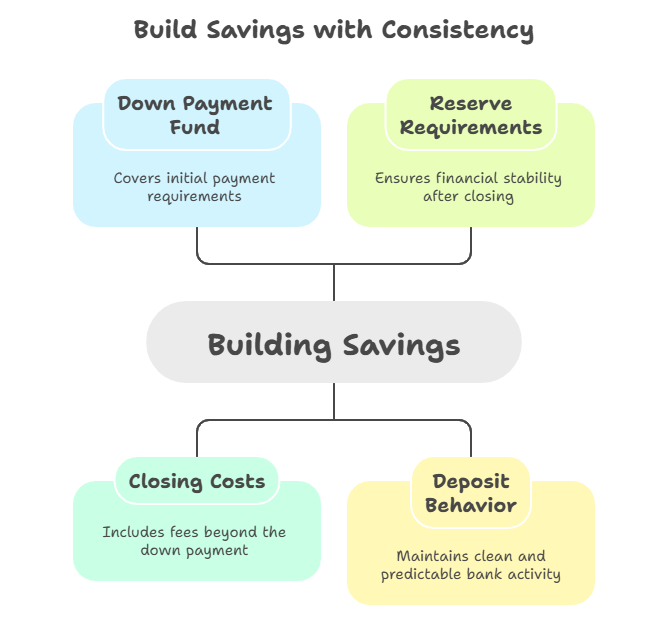
Step 5: Build Savings With Consistency
Savings must be stable, documented, and sufficient.
A. Down Payment Fund
Down payment requirements vary by loan type.
- FHA (3.5%)
- Requires minimum 3.5% down payment.
- Also includes upfront mortgage insurance.
- Lower down payment increases monthly cost.
- Conventional (3–5%+)
Minimum may be 3–5%, but higher down payments:
- Reduce mortgage insurance
- Improve approval strength
- Lower payment
- VA/USDA (If Applicable)
Eligible borrowers may qualify for zero down.
However, closing costs and reserves still matter.
- Gift Funds Documentation (If Used)
If receiving gift funds:
- Obtain a signed gift letter.
- Document the donor’s ability to provide funds.
- Document transfer into your account.
- Keep records clean and simple.
Unclear gift documentation causes delays.
B. Closing Costs
Closing costs are separate from the down payment.
- 2–5% of Purchase Price Estimate
Closing costs include:
- Lender fees
- Title fees
- Recording fees
- Escrow fees
Estimate conservatively.
- Prepaid Items (Taxes, Insurance)
Lenders collect prepaid taxes and insurance at closing.
These vary by:
- Property tax schedule
- Insurance cost
- Closing date timing
- Inspection & Appraisal Fees
Inspection and appraisal are typically paid upfront.
Budget separately to avoid dipping into reserves.
Continuing in the exact same structure and depth.
C. Reserve Requirements
Reserves are one of the most overlooked parts of a mortgage readiness checklist. Many buyers focus on down payment and closing costs but forget that lenders often want to see money left over after closing.
Reserves demonstrate that you can sustain the mortgage payment even if unexpected expenses arise.
- 1–6 Months of Projected Housing Payment
Projected housing payment includes:
- Principal
- Interest
- Property taxes
- Homeowners insurance
- HOA dues (if applicable)
This full amount is often referred to as PITIA.
Exactly what to do:
- Estimate your projected housing payment using conservative assumptions.
- Multiply that payment by the number of reserve months you want to target (1–6 months depending on strength of file and loan type).
- Set that amount aside separate from down payment and closing funds.
Example:
Projected housing payment: $2,000
3 months reserves = $6,000
6 months reserves = $12,000
That amount must remain available after closing.
What underwriters verify:
- Liquid or near-liquid funds
- Stability of those funds
- No sudden unexplained increases
What counts as reserves:
- Checking and savings
- Money market accounts
- Some retirement funds (usually at a discounted value)
- Investment accounts (subject to liquidity rules)
What does not count:
- Borrowed funds
- Undocumented deposits
- Business funds (in many cases)
- Proceeds from a loan
Mortgage-ready strategy:
Strong reserves can offset:
- Higher DTI
- Lower credit scores
- Variable income
Reserves reduce perceived risk.
- Additional Reserves for Multi-Unit Properties
Multi-unit properties (duplex, triplex, four-unit) carry greater risk because rental income may fluctuate.
Exactly what to plan for:
- Expect additional reserve requirements beyond standard guidelines.
- Build a stronger savings cushion before applying.
- Document rental projections conservatively.
Why this matters:
Underwriters assume:
- Potential vacancy
- Maintenance expenses
- Rental variability
Having extra reserves demonstrates capacity to handle those risks.
D. Deposit Behavior
This section of the mortgage readiness checklist focuses on keeping your bank activity clean and predictable.
- Consistent Monthly Transfers
Regular savings transfers demonstrate discipline.
Exactly what to do:
- Set up a recurring transfer from checking to savings.
- Use the same date each month.
- Transfer similar amounts consistently.
- Avoid random irregular transfers.
Example:
On the 5th of every month:
Transfer $800 labeled “Home Savings.”
Why this matters:
Consistent behavior shows:
- Financial planning
- Budget control
- Predictability
Unpredictable patterns raise questions.
- Avoid Unexplained Large Deposits
Large deposits inconsistent with your income pattern trigger documentation requests.
Exactly what to avoid:
- Cash deposits without source
- Frequent peer-to-peer transfers
- Moving funds between multiple accounts repeatedly
- Depositing borrowed money
If a large deposit occurs:
- Keep documentation immediately.
- Maintain proof of source.
- Avoid moving it multiple times before application.
Why this matters:
If the source cannot be documented, funds may not be allowed to count toward closing.
- Keep Source Documentation for Any Significant Deposits
Maintain a folder for:
- Gift letters
- Sale receipts
- Bonus pay stubs
- Tax refund confirmations
- Settlement statements (if selling an asset)
Mortgage-ready rule:
If money enters your account and is not payroll, keep proof.
Clean documentation avoids last-minute underwriting conditions.
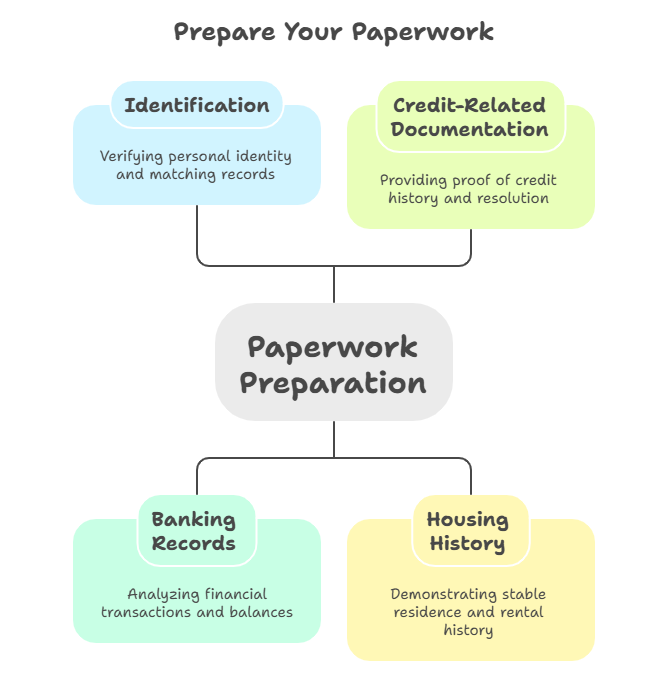
Step 6: Prepare Your Paperwork
Organized documentation is what turns a stressful underwriting process into a smooth one. Many approvals are delayed not because of credit or income, but because paperwork is incomplete, inconsistent, or messy.
Underwriting is documentation-driven. The cleaner your file, the fewer conditions you receive.
A. Identification
Identity verification is not just a formality. Lenders must confirm that you are who you claim to be and that all records align.
- Government-Issued ID
You will typically provide a driver’s license or passport.
Exactly what to do:
- Make sure the ID is not expired.
- Confirm the name on your ID matches:
- Your loan application
- Your credit report
- Your Social Security record
- If your address on the ID differs from your current address:
- Ensure your application reflects your current residence correctly.
- Be prepared to explain recent moves.
Why underwriting checks this carefully:
- Identity fraud prevention
- Name matching across credit and income documentation
- Compliance requirements
Common issues that cause delays:
- Recently married or divorced borrowers whose name changed but credit report still shows prior name.
- Nicknames used on application but legal name on ID.
- Expired licenses.
Mortgage-ready tip:
If your name recently changed, update your Social Security record and allow credit bureaus time to update before applying.
- Social Security Card (If Requested)
Some lenders request a copy to confirm SSN accuracy.
Exactly what to verify:
- Name matches application exactly.
- Social Security number matches credit report.
- No spelling discrepancies.
If your Social Security record has an outdated name, update it before application.
Why this matters:
Inconsistent identity records can:
- Trigger fraud alerts
- Delay underwriting
- Require additional documentation
Identity clarity equals underwriting efficiency.
- Permanent Residency Documentation (If Applicable)
If you are not a U.S. citizen, your residency and work eligibility must be verified.
Exactly what to prepare:
- Valid permanent resident card (green card) or acceptable visa documentation.
- Confirm work authorization validity.
- Ensure expiration dates extend beyond expected closing date.
Why this matters:
Lenders verify:
- Legal ability to reside in the U.S.
- Legal ability to work and earn qualifying income
- Stability of status
Common delay:
Visa nearing expiration without renewal documentation.
Mortgage readiness includes immigration documentation stability.
B. Banking Records
Underwriting does not glance at your bank statements. They analyze them.
- Last 2 Months Personal Bank Statements
You must provide full statements, not partial screenshots.
Exactly what to submit:
- Complete official PDF statements.
- Include all pages, even blank pages.
- Ensure statement period dates are visible.
- Ensure your name and account number (partially masked) are visible.
What underwriters review:
- Beginning and ending balances
- Deposit consistency
- Large deposits
- Overdraft history
- Recurring withdrawals
- Gambling or unusual activity patterns
- Transfers between accounts
What causes conditions:
- Unexplained large deposits
- Frequent cash deposits
- Negative balances
- Repeated overdraft fees
- Multiple unexplained transfers
Mortgage-ready behavior:
60–90 days before applying:
- Avoid cash deposits
- Avoid large irregular transfers
- Avoid account overdrafts
- Avoid unusual financial behavior
Your statements should look calm and predictable.
- Retirement Account Statements (If Using Funds)
If retirement funds are being used for reserves or closing:
Exactly what to confirm:
- The statement shows a vested balance.
- You understand withdrawal penalties and taxes.
- You document the transfer clearly if funds are moved.
- You do not move funds repeatedly before the application.
Underwriting evaluates:
- Percentage of funds accessible
- Liquidity
- Stability of the account
Some lenders only count 60–70% of retirement funds toward reserves.
Mortgage-ready caution:
Avoid early distribution unless strategically necessary. If using for reserves only, often funds can remain in the account without liquidation.
- Investment Accounts
Brokerage and non-retirement investment accounts can count toward reserves.
Exactly what to prepare:
- Provide most recent full statement.
- Confirm ownership.
- If liquidating assets:
- Document sale transaction.
- Document transfer into bank.
- Avoid volatile trading during underwriting window.
Why this matters:
Large fluctuations in investment balances close to application may require updated statements and create extra conditions.
Stability reduces documentation burden.
C. Credit-Related Documentation
If your credit history contains complexity, documentation must be organized and ready.
- Dispute Outcome Letters
If you disputed accounts during your mortgage readiness process:
Exactly what to keep:
- Final resolution letters from bureaus or furnishers.
- Updated credit report reflecting correction.
- Documentation of removal or update.
Why this matters:
Underwriters may:
- Question disputed accounts
- Require confirmation of resolution
- Require disputes removed before closing (program dependent)
Mortgage-ready rule:
Do not leave active disputes unresolved at application unless strategically necessary.
- Collection Payoff Letters (If Applicable)
If collections were paid:
Exactly what to obtain:
- Written confirmation from collector.
- Statement showing zero balance.
- Confirmation of how it will report.
Keep proof of payment (bank confirmation or receipt).
Why this matters:
Underwriters may:
- Require proof debt is satisfied
- Verify no remaining obligation
- Confirm updated reporting
Verbal confirmations are insufficient.
- Explanation Letters for Late Payments
Letters of explanation should be professional and structured.
Exactly how to write it:
- State the event clearly.
- Briefly explain cause.
- State resolution.
- Confirm stability now.
Example structure:
“In March 2024, I experienced a temporary reduction in work hours due to company restructuring. This caused one 30-day late payment on my auto loan. My hours were restored the following month, and I brought the account current immediately. Since that time, all payments have been made on time.”
Avoid:
- Emotional narratives
- Blaming lenders
- Excessive detail
- Defensive tone
Underwriters want clarity and resolution.
- Bankruptcy Discharge Papers (If Applicable)
If bankruptcy occurred:
Exactly what to provide:
- Petition and discharge paperwork.
- Filing date.
- Discharge date.
- Case number.
What underwriting evaluates:
- Time elapsed since discharge
- Re-established credit
- No new delinquencies
- Stability since event
Bankruptcy alone does not disqualify borrowers. Post-bankruptcy behavior is what matters.
D. Housing History
Housing stability is part of risk evaluation.
- 2-Year Address History
Provide a complete two-year address history.
Exactly what to list:
- Street address
- City, state, zip
- Dates of residence (month/year)
If you moved multiple times, ensure no gaps in timeline.
Why this matters:
Underwriters verify stability and rental history.
- Landlord Contact Info
If renting:
Provide the landlord’s:
- Name
- Phone number
- Email (if available)
Landlords may be contacted for verification.
If renting from family, documentation may require additional clarification.
- Rent Payment Verification
Proof of rent payment history strengthens your file.
Acceptable documentation:
- Bank statements showing rent payment
- Cancelled checks
- Official verification of rent form
What weakens files:
- Cash payments without proof
- Inconsistent payment amounts
- Frequent late rent
Mortgage readiness includes rental stability.
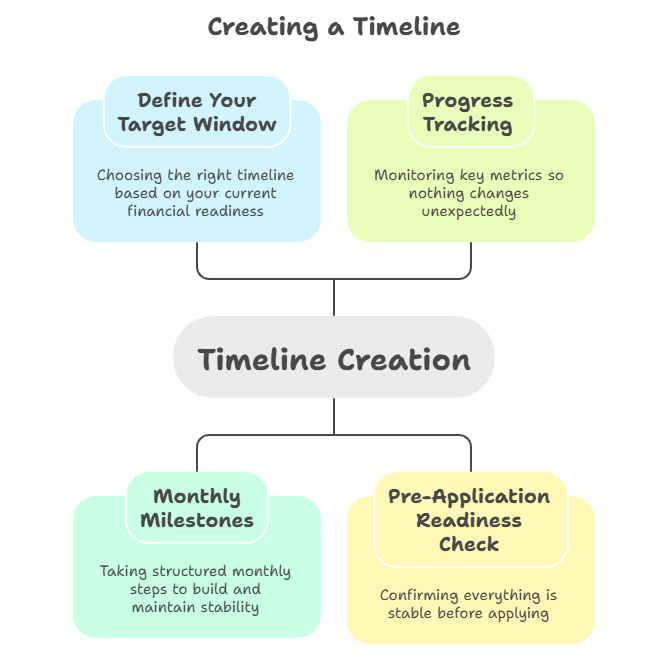
Step 7: Create a Timeline and Stick to It
Mortgage readiness is a structured progression, not last-minute scrambling.
A. Define Your Target Window
- 3 Months
Appropriate if:
- Credit already stable
- Utilization slightly high
- Documentation needs organization
Focus on optimization, not rebuilding.
- 6 Months
Appropriate if:
- Utilization needs reduction
- Savings need buildup
- Minor recent lates exist
Allows seasoning of improved behavior.
- 12+ Months
Appropriate if:
- Recent delinquencies
- Collections
- Major credit events
- Job instability
Time rebuilds stability and confidence.
B. Monthly Milestones
- Month 1: Stabilize Credit
- Set autopay
- Eliminate late payments
- Organize the documentation folder
- Establish a consistent savings transfer
Goal: Stop volatility.
- Month 2–3: Pay Down Balances
- Reduce the highest utilization cards
- Monitor reporting timing
- Avoid new inquiries
- Maintain stable deposit patterns
Goal: Improve score and reduce DTI impact.
- Month 4–6: Strengthen Savings
- Build a reserve cushion
- Avoid unexplained deposits
- Allow funds to season
- Maintain employment stability
Goal: Strengthen underwriting confidence.
- Ongoing: Protect Consistency
- No new credit
- No structural changes
- Monthly monitoring
- Maintain documentation updates
Goal: Maintain stability until closing.
C. Progress Tracking
- Monthly Credit Review
Track:
- Scores
- Utilization percentages
- New inquiries
- Account updates
- Reporting changes
Maintain a record so nothing surprises you.
- Monthly Savings Check
Track:
- Beginning balance
- Ending balance
- Consistent transfers
- Absence of irregular deposits
Savings growth should look predictable.
- DTI Recalculation
Recalculate monthly as balances drop or income changes.
Knowing your real DTI helps set realistic purchase targets.
- Documentation Updates
Keep updated:
- Pay stubs
- Bank statements
- Investment statements
- Income documentation
Do not wait until the lender requests them.
D. Pre-Application Readiness Check
Before you submit a mortgage application, pause and confirm that every major pillar of your file is stable. This is where preparation turns into approval strength. You don’t want to “see what happens.” You want to apply when your profile is clean, steady, and defensible.
- No Recent Late Payments
Ideally, you should have no late payments within the last 12 months. That’s the cleanest signal of financial stability.
At a minimum, there should be no recent pattern of delinquency. One isolated late from over a year ago is very different from multiple lates in the past six months. Underwriting focuses heavily on recent behavior because it reflects your current risk level, not your past hardship.
If you’ve had lates, stop them completely and build a clean streak before applying.
- Utilization Optimized
Your credit cards should be below 30% utilization, and ideally under 20%. Strong files often sit in the 1–9% range.
Have one card reporting a small balance, and the rest reporting low or zero balances. This shows active but controlled credit use.
Remember, it’s not about how much you owe overall, it’s about what is reporting at the time underwriting pulls your credit.
- Stable Employment
No recent job changes without clear documentation. If you did change jobs, make sure:
- The income is stable and documented
- There’s no gap in employment
- The pay structure (salary vs. commission) supports qualification
Also, no income decline. Even a pay cut can affect your debt-to-income ratio and trigger a re-evaluation.
Underwriting is looking for predictable income that will continue, not uncertainty.
- Savings Seasoned
Your down payment and closing cost funds should be sitting in your account for at least 60 days. This is called “seasoning.”
If there are large deposits, they must be documented clearly (source, transfer trail, gift letter if applicable). Unexplained deposits are one of the most common underwriting delays.
Stability in your bank account builds confidence. Sudden large movements create questions.
- Documents Organized
Before your lender even asks, you should already have:
- Government ID
- Recent pay stubs
- Two years of tax returns (if required)
- Bank statements
- Explanations for any credit issues
- Documentation for any large deposits or job changes
The more organized you are upfront, the smoother underwriting becomes. Delays rarely happen because someone is unqualified; they happen because documentation is incomplete.
|
Mortgage Readiness Steps |
|
| Step 1: Know Your Starting Point | Credit snapshot, budget snapshot, savings snapshot, and your readiness gap |
| Step 2: Stabilize Your Credit Habits | Payment protection, utilization control, behavior rules, monthly monitoring |
| Step 3: Document Your Income | W-2 vs self-employed needs, extra income, stability checks |
| Step 4: Reduce Monthly Debt Pressure | Installment strategy, revolving paydowns, DTI targets, smart adjustments |
| Step 5: Build Savings With Consistency | Down payment, closing costs, reserves, clean deposit behavior |
| Step 6: Prepare Your Paperwork | ID, bank statements, credit-related docs, housing history |
| Step 7: Create a Timeline and Stick to It | Target window, milestones, tracking, readiness check before applying |
Conclusion
A strong mortgage readiness checklist does more than improve your credit score; it prepares you to qualify, stay qualified, and close without surprises. When your credit is stable, your income is documented correctly, your debt is controlled, and your savings are clean and verifiable, underwriting becomes smoother and more predictable.
That’s what makes the Mortgage Ready Program different. It’s not generic credit repair. It’s structured mortgage preparation built around how lenders actually review files; credit, income, savings, and documentation working together.
If homeownership is your goal, start preparing before you apply. Sign Up Today!



0 Comments