
Have you ever thought about using layaway to get the things you need now but pay for them later? You’re not alone! While layaway isn’t as common as it used to be, it’s still around and might seem like a great option, especially when you’re looking to spread out payments.
But here’s the catch: is it a smart choice? Does it affect your credit? And what about your mortgage application? Let’s dive deep into layaway in 2025 and break it down so you can decide if it’s right for you.
Table of Contents
What is Layaway, and How Does it Work?
If you’ve heard the term “layaway” but aren’t quite sure how it works, you’re in the right place. Layaway is a payment option where you select an item, but instead of paying for it all at once, you make a series of payments over time. Once you’ve paid off the item in full, you can pick it up.
For example, if you want to buy a $500 item but don’t have all the money up front, you might be able to place the item on layaway. You’d put down a deposit and then pay the remaining balance in installments, usually over several weeks or months. Remember, you don’t take the item home until it’s fully paid off.
Originally, layaway became popular during the Great Depression when cash was scarce and people struggled to make large purchases. It gave consumers a way to secure the items they wanted without having to pay for them all at once. Even today, layaway is used by some stores, especially during peak shopping seasons like the holidays.
Online Layaway: The New Way to Shop
With the rise of e-commerce, many online retailers have adopted layaway as a payment option. While the traditional layaway system required you to physically go to a store, online layaway brings that convenience to your home.
Many online retailers like Walmart, Overstock, and others offer layaway programs where you can select your items and pay them off in installments. While this might sound similar to “Buy Now, Pay Later” (BNPL) services, they work a bit differently.
Buy Now, Pay Later (BNPL) Services vs. Layaway vs. Credit: What’s the Difference?
This is where things can get confusing. In recent years, BNPL services like Afterpay, Klarna, and Affirm have become more popular, and some people might mix them up with layaway. However, there are key differences between them:
- Layaway: You pay up front in installments but don’t get the item until it’s fully paid for.
- BNPL Services: With BNPL, you usually get the item right away and pay in installments. BNPL often charges interest if you miss payments or don’t pay off your balance within the agreed timeframe.
- Credit: With credit, like using a credit card, you buy the item, and the credit card company essentially loans you the money. You can pay it off over time, but interest rates apply if you don’t pay off the balance before the due date.
Which is better? It really depends on your situation. BNPL gives you immediate access to the item, but it can get expensive if you miss payments. Layaway, on the other hand, is a risk-free way to pay over time without interest but requires patience since you don’t get the item until it’s fully paid.
Here’s a comparison table for Layaway, Credit, and Buy Now, Pay Later (BNPL) to help you easily understand the differences:
| Feature | Layaway | Credit | Buy Now, Pay Later (BNPL) |
| What You Get | Item is held until fully paid. | Item is received immediately. | Item is received immediately. |
| Payment Method | Pay in installments over time. | Borrow money and repay over time. | Pay in installments, often with no interest if paid within the agreed term. |
| Interest | No interest (unless you miss payments). | Can have high interest if not paid on time. | No interest if paid on time; may have fees or interest if late. |
| Impact on Credit Score | Does not affect credit score. | Impacts credit score based on payment history and debt usage. | May impact credit score if payments are missed. |
| Fees | May charge fees for missed payments. | May have fees for late payments. | May have fees for late payments, especially if the balance is not paid on time. |
| Flexibility | Fixed payment schedule; no early access to the item. | Flexible usage but can result in debt if not managed carefully. | Flexible but can lead to high debt if not managed properly. |
| Best For | People who want to save money over time without borrowing. | People who need to make purchases now and pay over time (can be risky if not paid off). | People who want the product now and are confident in repaying quickly. |
| Eligibility | Usually no credit check. | Creditworthiness is required. | May or may not require a credit check, depending on the service provider. |
| Application Process | Simple; done through participating stores. | Involves application with the lender (e.g., bank, credit card company). | Simple; done through participating BNPL services. |
Is Layaway the Same as Credit?
We want to emphasize that layaway is not the same as credit, and this is a really important distinction to make, especially if you’re concerned about your credit score.
When you use credit, like a credit card or a loan, the lender is extending credit to you. You’re borrowing money to make a purchase now, and you’ll repay that debt over time with interest if you don’t pay it off before the due date. This can have an impact on your credit score since credit reporting agencies track your debt levels, payment history, and overall credit usage.
On the other hand, with layaway, you’re essentially paying in advance for something. There’s no borrowing involved, and there’s no impact on your credit score. Once you’ve paid in full, the item is yours, and the transaction is complete.
This might sound like a great way to avoid the potential pitfalls of credit, especially if you’re trying to keep your credit score in good shape.
How Does Layaway Affect Your Credit Score and Mortgage Application?
The good news is that layaway does NOT affect your credit score. This is one of the main reasons that people still use it to buy products. But how does this relate to a mortgage application?
Well, we all know that a credit score is one of the basic elements of a mortgage application, and for lenders, it is one of the first things they look at!
Basically, layaway doesn’t involve borrowing money, and it won’t show up on your credit report. As a result, it won’t affect your credit score or your ability to qualify for a mortgage.
However, while layaway doesn’t hurt your credit, there is one potential downside to consider: missed payments. If you miss a layaway payment, the store might cancel the transaction or charge you fees, and in some cases, they might send you to collections. This could indirectly impact your mortgage application if it leads to collection accounts showing up on your credit report.
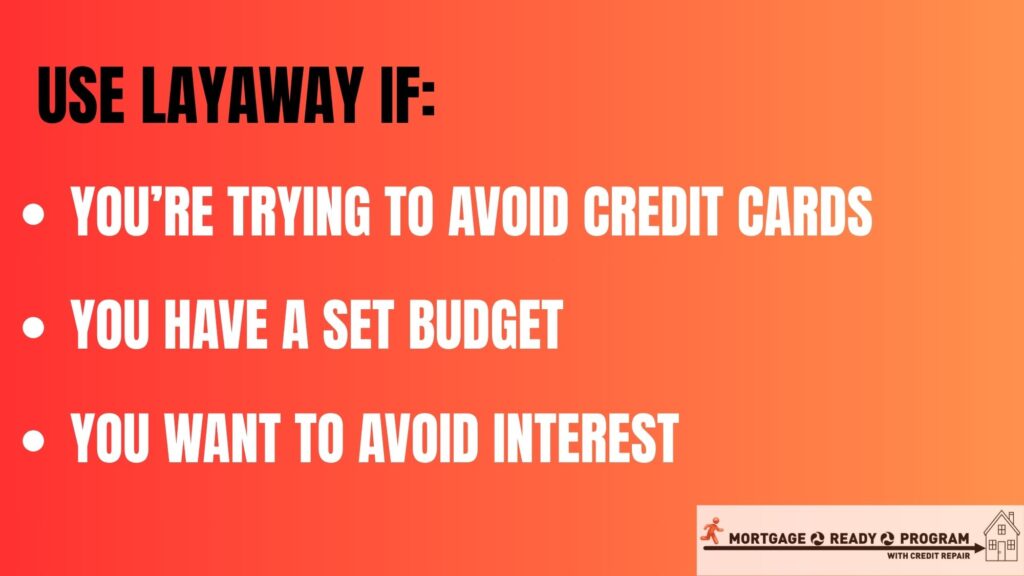
Use Layaway if…
So, let’s respond to the big question: Should you use layaway in 2025? Here are some scenarios where layaway might make sense:
- You’re trying to avoid credit cards: If you’re working on improving your credit score or just want to avoid using credit, layaway can be a solid option.
- You have a set budget: Layaway forces you to stick to your budget, since you can’t get the item until it’s fully paid for.
- You want to avoid interest: Unlike some BNPL options or credit cards, there’s no interest with layaway, which can save you money in the long run.
Alternatives to Layaway
If layaway isn’t your thing, there are alternatives you can consider:
- Buy Now, Pay Later (BNPL): If you need the item immediately and can handle the interest and potential late fees, BNPL can be a good option.
- Personal Loans: Some people use small personal loans for larger purchases, though this can impact your credit if you miss payments.
- Credit Cards with 0% APR: If you have a credit card that offers 0% APR for a set period, this could be a cheaper way to spread out payments.
Tips for Using Layaway
- Read the Terms: Not all layaway plans are created equal, so be sure to understand the terms, including fees, payment schedules, and penalties for missed payments.
- Plan Your Budget: Make sure you can realistically afford the payments before committing.
- Avoid Long-Term Layaway: The longer the layaway term, the more likely you are to miss payments. Try to keep the term short to avoid complications.
Conclusion
Here is my suggestion: If you are thinking about getting a mortgage (which most people do), layaway is a better option compared to using credit cards or BNPL. But make sure to buy something that you can afford. Late payments can hurt your credit score and ultimately your mortgage application.
If you have any questions, let us know in the comments below, and don’t forget to sign up for the mortgage ready program to get one step closer to homeownership!



0 Comments